


/file/publisher-c1a3f893382d2b2f8a9aa22a654d9c97/2023/05/e5c5edb7c1d78d7e2dff97ea70de35e9.jpg)

'Trapped People': Spotlighting migrant smuggling from Indonesia to M’sia
MALAYSIANSKINI | Filmmaker and activist Mahi Ramakrishnan’s latest documentary ‘Trapped People’ looks at debt bondage and forced labour, while also exploring reasons for the flourishing trade of migrant smuggling from Flores, Indonesia to Malaysia.
In conjunction with a special screening of the documentary, Malaysiakini spoke to Mahi about the film and what she hopes the viewers will take away with them.
“While I interviewed...
MALAYSIANSKINI | Filmmaker and activist Mahi Ramakrishnan’s latest documentary titled “Trapped People” looks at debt bondage and forced labour, while also exploring reasons for the flourishing trade of migrant smuggling from Flores, Indonesia to Malaysia.
In conjunction with a special screening of the documentary, Malaysiakini spoke to Mahi about the film and what she hopes the viewers will take away with them.
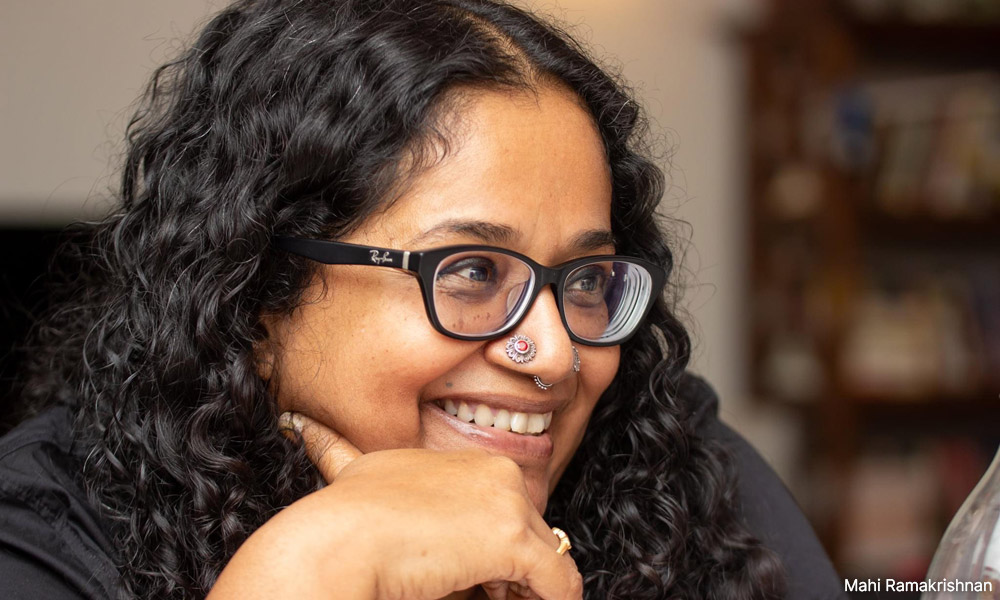
“While I interviewed Irene Xavier from Persatuan Sahabat Wanita Selangor and former Klang MP Charles Santiago, who gave powerful insights, I wanted the migrant workers to take a central role.
“I wanted more of their voices to be heard. That took a lot of thinking through after I had shot the entire documentary,” explained Mahi.
She added that she is blessed to have an incredible team.
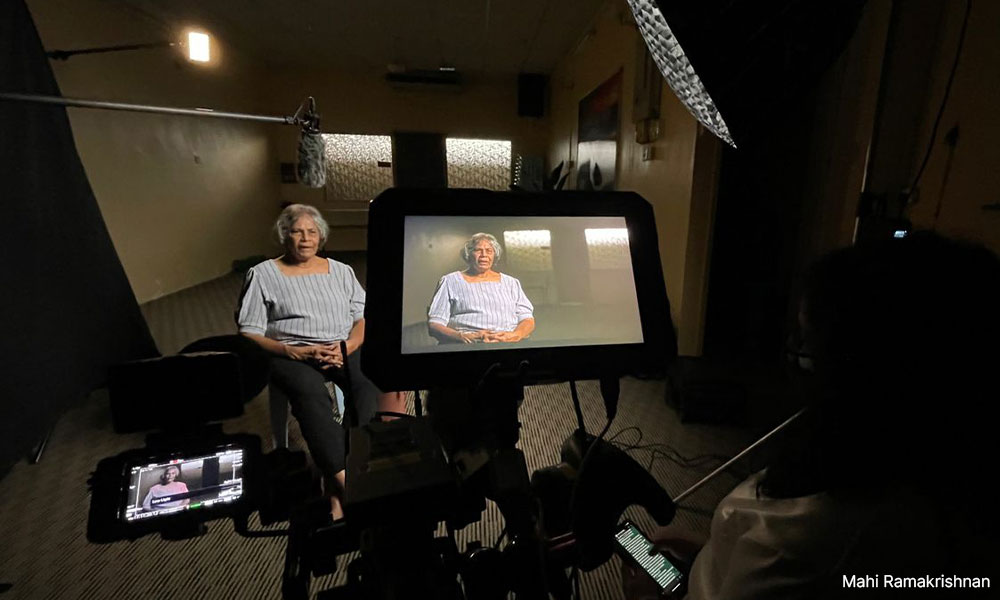
“Wong Chin Hor, the cinematographer, has an eye for detail, is very smart, a perfectionist and one who goes out of his way to get emotive shots. He understands me and can translate my ideas into the footage.
“The gaffer, Ian Chin, is very helpful and good at lighting. I also enjoyed working with Savita Saravanan, my daughter, who edited this documentary for me. She’s got a good eye as well and is a smart editor.”
Mahi was inspired to make “Trapped People” as she has worked with migrant workers for the past 18 years and has seen the abuse and torture perpetrated against them.
“They are not seen as human beings but mere bodies that can be smuggled, bought and sold for large profits. This unspeakable violence is the motivation behind this documentary, where I felt strongly about the need to humanise them and give them a platform to tell their stories.
“The horror and humiliation they face, the sexual favours they are forced to give to avoid arrest, the sexual abuse that’s been normalised and the objectifying of their bodies shook my world. I hope this documentary will put an end to their enforced silence fearing reprisals,” said Mahi.
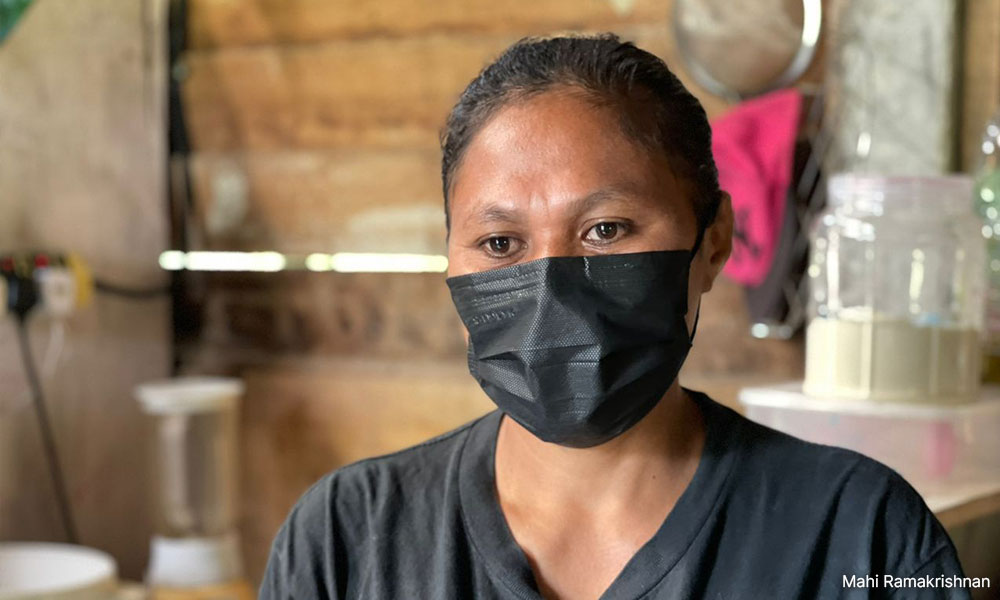
“But equally captivating is their courage, determination and hope that tomorrow will be a better day. I have a daughter and a son. Just like how I want a better world for them, migrant workers wish the same for their children.
“They cross borders to seek gainful employment so that their children do not have to suffer the same fate as them and instead have access to a decent education. I have learned from their resilience,” Mahi added.
She points out that four million documented and two million undocumented migrant workers contribute to Malaysia’s economy and hopes her documentary will put an end to their exploitation by Malaysians.
Not without its challenges
Shooting for the documentary began last year but the production team had to take a short break due to insufficient funds and also a spike in Covid-19 infections.
It did not help that Mahi’s children and partner became infected as well.
Editing took a while as well as she was going back and forth with the storyline.
According to the United Nations’ Office on Crimes and Drugs, “migrant smuggling is the facilitation, for financial or other material gain, of irregular entry into a country where the migrant is not a national or resident.”
The migrants Mahi spoke to worked closely with Persatuan Sahabat Wanita Selangor, who supported the movie financially. They know and trust Irene and that gives Mahi easy access.
“But it’s never easy for people to talk when they have a camera pointing at their faces. Cameras are intrusive.
“I had to go back and forth a few times just to get them to be comfortable in my presence. The interviews with them are telling, honest but explosive. It exposes corruption involving both Indonesian and Malaysian agents plus some of our immigration officers.
“As such, I never filmed their faces. They were either masked or out of focus. This is to protect their identity. If I am asked by the authorities to give all my shot footage, I will do so without worrying because there is not one shot where their faces are visible,” explained Mahi.
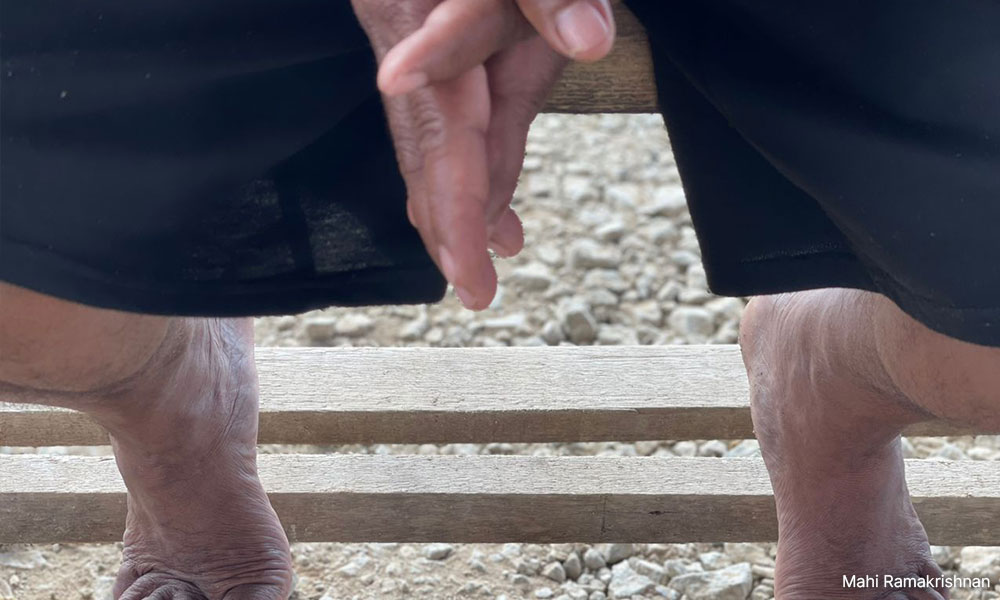
She also said many Malaysians close their eyes to the atrocities that are committed against migrant workers and she hopes her documentary will help open their eyes and look at migrants as human beings who deserve to be treated with respect and dignity.
“Malaysia has been turning increasingly racist and xenophobic in the last few years. Migrant workers are portrayed as sub-humans who deserve the abuse, discrimination and violence they face at the hands of their employers.
“It’s ironic that we look at these migrant workers with disdain but call those who come with education and occupy higher-ranking jobs expatriates. But yes, I do hope that this documentary changes perspectives and shifts conversations,” said Mahi.
Commenting on a tense meeting between local residents and Rohingyas in a low-cost apartment in Penang recently, Mahi noted: “Such confrontations have been happening for some time now. The main reason for this is xenophobia and the Rohingya seem to bear the brunt of it.
“It confuses me as well: are we bullying them because many of them are uneducated or because they have darker skin? It makes me sick to think about how toxic we are as a society.
“Having said that, it infuriates me to see posters on the Immigration Department’s social media platforms urging Malaysians to report undocumented migrants.
“While international refugee law provides different layers of protection to refugees as they are fleeing persecution, the fact is that it is forced migration, whether it concerns refugees or migrants.
“So to egg on Malaysians to snitch on marginalised communities such as migrant workers and refugees is shameful. It creates even more divisions and hatred against them.”
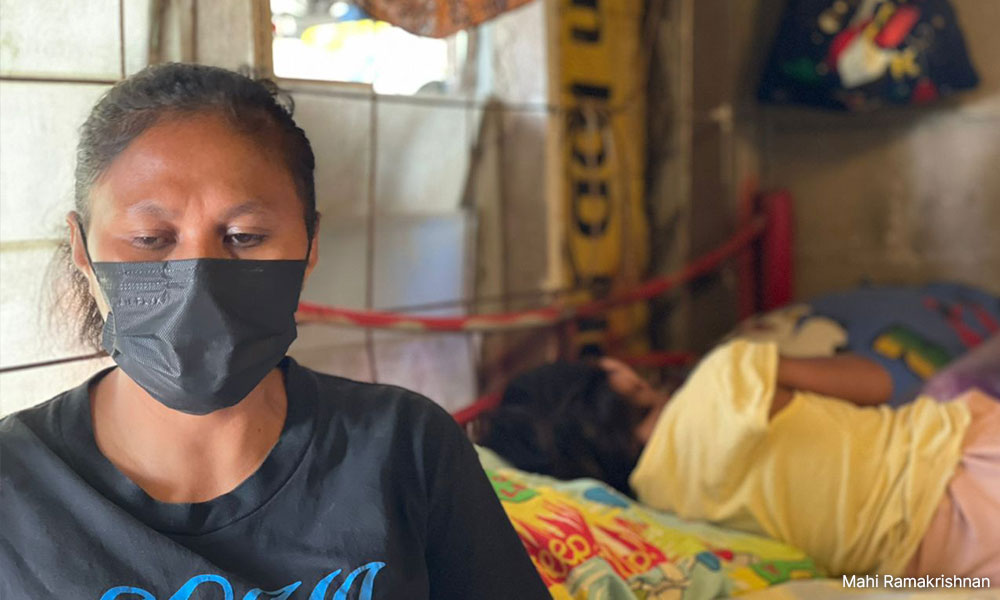
“Trapped People” will be screened on May 21 for now as Mahi and her team are organising screenings in different parts of Malaysia soon.
“As a filmmaker, I would like to reach out to a wider audience as possible. I want students, lawmakers, ministers, home-makers, key stakeholders and just about everyone to watch it.
“The film will not be on any public platform until I have exhausted sending it to film festivals around the world,” she said.
“Trapped People” has so far been submitted to the New York International Immigration Film Festival and New York Film Festival.
A special screening of the documentary will be held on May 21 at PJ Live Arts, Level 2 Block E, The Square at Jaya One. The screening will be followed by a panel discussion titled “How Long Would We Continue to Build Malaysia on the Bare Backs of Migrant Workers?”.
The panellists are Persatuan Sahabat Wanita Selangor Irene Xavier, Social Protection, Development of Human Resources for Rural Areas Maalini Ramalo, child rights activist Hartini Zainudin, and Project Liber8 executive director New Su Shern, who will be moderating.
Registration begins at 4pm. Entrance is free but you need to RSVP by sending a WhatsApp to 0123739419.
MALAYSIANSKINI is a series on Malaysians you should know.
Sofea Helmy’s uphill battle to support local music talents
Indie studio makes waves with Southeast Asia-themed games
Nature lovers give critters a social media presence
After victory over dam and loggers, Orang Asli activist takes on Putrajaya
Yasmin Yusuff still firing on all cylinders
Just like YBeeee, Jo Kukathas moves with the times
/file/publisher-c1a3f893382d2b2f8a9aa22a654d9c97/2023/05/40dd6e19ba5b0ac59cd2dffb13022e41.png)
/file/publisher-c1a3f893382d2b2f8a9aa22a654d9c97/2022/04/b6937853e2d259bebe92bcabe3f46cbd.jpg)
/file/publisher-c1a3f893382d2b2f8a9aa22a654d9c97/2023/01/4e662d032ca8d7a7968d66e560da102d.jpg)
/file/1146/94850003cb1341a0b02ed6a598d280a3.jpeg)
/file/publisher-c1a3f893382d2b2f8a9aa22a654d9c97/2022/03/cc13381571329d552c7763b64aa72c09.jpg)
/file/1239/62bcaea9dceea48d75e6ecde9c87a01a.jpeg)


Are you sure you want to delete this comment?
This action cannot be undone.